
MENU UTAMA
INFORMASI
Reader
Author
TOOLS


ISSN
INDEX



Statistik Pengunjung
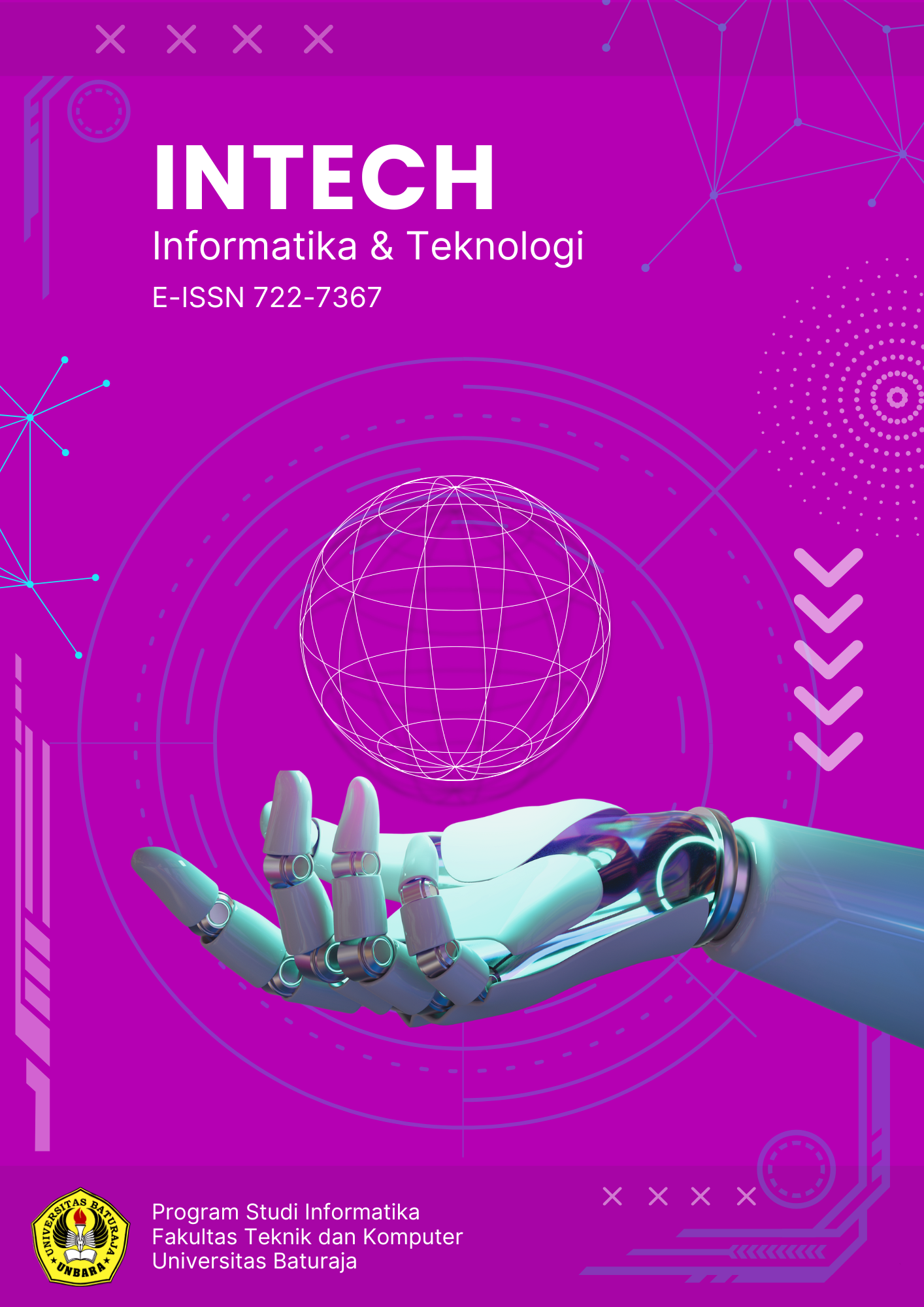

INTECH (Informatika dan Teknologi) recognizes the growing role of Artificial Intelligence (AI), including generative AI tools and AI-assisted technologies, in scientific research, academic writing, and scholarly publishing. This policy establishes guidelines for the responsible, transparent, and ethical use of AI by authors, editors, reviewers, and other contributors involved in the publication process.
The policy aims to maintain academic integrity, scientific accuracy, originality, confidentiality, and accountability in all manuscripts submitted to or published by INTECH.
Authors may use AI tools to support specific research and writing activities, including language editing, grammar correction, translation, summarization, coding assistance, and data analysis, provided that such use is appropriate, transparent, and consistent with accepted research ethics.
Authors must comply with the following requirements:
Human Responsibility: Authors remain fully responsible for the accuracy, originality, validity, and integrity of their manuscripts, including all content generated or modified with the assistance of AI tools.
Disclosure of AI Use: Any substantive use of generative AI in preparing a manuscript, generating text, producing images, creating code, or conducting research-related analysis must be clearly disclosed in the manuscript.
Accuracy and Verification: Authors must independently verify AI-generated information, references, citations, mathematical expressions, code, and research findings. AI-generated content must not be accepted without appropriate verification.
Originality and Plagiarism: AI tools must not be used to reproduce copyrighted material, fabricate sources, misrepresent existing research, or disguise plagiarism and duplicate publication.
Research Data Integrity: AI must not be used to fabricate, falsify, manipulate, or misrepresent research data, experimental results, images, or statistical findings.
Protection of Confidential Information: Authors must not upload confidential, sensitive, proprietary, or personally identifiable research information to AI platforms without appropriate authorization and safeguards.
AI tools, including large language models and other generative AI systems, cannot be listed as authors or co-authors of manuscripts submitted to INTECH.
Authorship requires human accountability, intellectual contribution, and the ability to take responsibility for the integrity of the research. Authors must ensure that all individuals listed as authors meet the applicable authorship criteria and approve the final manuscript.
AI tools may be acknowledged as having provided assistance, where appropriate, but such acknowledgment does not constitute authorship.
Authors must disclose substantive uses of AI tools in a dedicated statement within the manuscript, preferably under a heading such as “Declaration of Generative AI and AI-Assisted Technologies.”
The disclosure should identify the AI tool used, its purpose, and the extent of its contribution to the manuscript.
Example:
“During the preparation of this manuscript, the authors used [name of AI tool] for [specific purpose]. The authors reviewed, verified, and revised the generated content and take full responsibility for the accuracy, originality, and integrity of the published work.”
If no generative AI tools were used in preparing the manuscript, authors may include the following statement when required by the journal:
“The authors declare that no generative AI tools were used in the preparation of this manuscript.”
Routine spelling, grammar, and reference-formatting tools that do not generate substantive content may not require disclosure, unless their use materially affects the manuscript or applicable journal requirements specify otherwise.
Editors may use AI-assisted tools for appropriate administrative or editorial support, such as language assistance, workflow management, or preliminary technical checks, provided that such use complies with the journal's confidentiality and data protection requirements.
Editors must:
Retain full editorial responsibility for all decisions concerning manuscript evaluation, acceptance, revision, or rejection.
Never delegate final editorial decisions to AI systems.
Protect the confidentiality of submitted manuscripts, reviewer reports, author identities, and editorial correspondence.
Avoid uploading unpublished manuscripts or confidential editorial materials to external AI tools unless their use is authorized and adequate confidentiality and data protection safeguards are in place.
Independently verify any AI-assisted assessment and ensure that editorial decisions are based on scholarly merit, relevance, originality, methodological rigor, and ethical compliance.
Peer reviewers must evaluate manuscripts independently and maintain strict confidentiality throughout the review process.
Reviewers must not upload unpublished manuscripts, confidential manuscript content, research data, or review reports to public or otherwise unauthorized AI tools.
AI tools must not replace the reviewer's independent scholarly judgment. Reviewers remain responsible for the accuracy, fairness, relevance, and professionalism of their comments and recommendations.
Any AI assistance permitted by the journal must comply with confidentiality requirements and applicable editorial instructions. Reviewers must disclose substantive AI assistance in preparing their review when required by the journal.
The use of AI to generate or modify images, illustrations, software code, datasets, simulations, or other research materials must comply with applicable ethical standards, intellectual property laws, and research integrity requirements.
Authors must:
Disclose the use of AI when it materially contributes to research materials or reported results.
Explain relevant AI-assisted methods sufficiently to support reproducibility and independent evaluation.
Ensure that generated or modified images do not misrepresent experimental evidence or scientific observations.
Verify AI-generated code, datasets, and analytical outputs before using them to support research conclusions.
Ensure that the use of AI does not violate licensing conditions, privacy rights, confidentiality obligations, or third-party intellectual property rights.
The use of AI-generated materials does not exempt authors from responsibility for the validity and integrity of the reported research.
INTECH does not permit the use of AI to facilitate academic misconduct, including but not limited to:
Fabrication or falsification of research data, results, or references.
Plagiarism, duplicate publication, or misrepresentation of authorship.
Generation of misleading or manipulated scientific evidence.
Concealment of substantive AI contributions where disclosure is required.
Violation of confidentiality, privacy, copyright, or other applicable legal and ethical obligations.
Manuscripts suspected of violating this policy may be subject to additional editorial assessment. Where a violation is established, INTECH may request clarification or correction, reject the manuscript, or take appropriate post-publication action, including correction or retraction, in accordance with the nature and seriousness of the violation and the journal's publication ethics procedures.
AI technologies and related ethical standards continue to evolve. INTECH reserves the right to review and update this policy to reflect developments in scholarly publishing, research ethics, applicable laws, and recognized publication standards.
Authors, editors, and reviewers are expected to follow the version of the policy applicable to their submission or editorial assignment.
INTECH supports the responsible use of AI as an assisting technology in research and scholarly communication. However, AI must not replace human intellectual responsibility, independent scholarly judgment, research integrity, or ethical accountability.
All authors, editors, and reviewers are expected to uphold the principles of transparency, honesty, confidentiality, originality, and accountability to maintain the quality and credibility of scholarly publications in INTECH (Informatika dan Teknologi).
Informatika Dan Teknologi (INTECH) is licensed under the CC BY-NC 4.0 license.
Published by Universitas Baturaja.